Free UK scam-awareness guide
Pause before you click, reply or pay
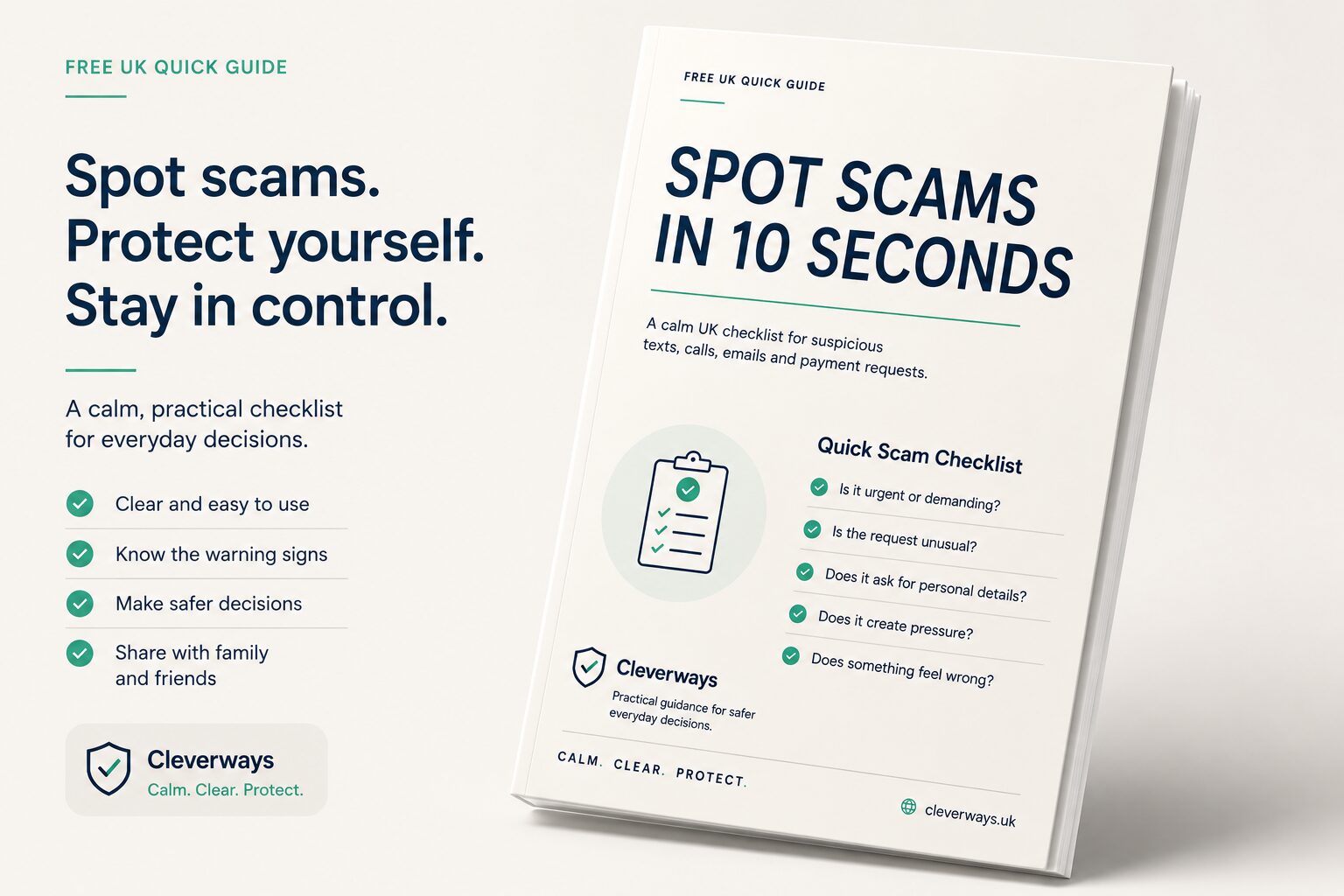
A simple 10-second check for suspicious texts, calls, emails and payment requests. Written in plain English to help you slow down and take the right next step.
What it helps with
A short check for pressured moments
Scams often work by creating urgency, false authority or misplaced trust. The guide gives you a simple routine to use before you click, reply, share details or send money.
- UrgencySpot pressure to act immediately.
- AuthorityCheck claims from banks, delivery firms or official-looking messages.
- LinksPause before opening suspicious links or attachments.
- PaymentsSlow down before paying, moving money or sharing codes.
Built for practical use
The guide is designed to be kept nearby, shared with family, or used when a message or call does not feel right.
For households
Use it as a quick reminder before clicking links, replying to texts or trusting unexpected calls.
For families
Share a calm checklist without blame, panic or complicated fraud language.
For small teams
Use it as a simple awareness prompt for common scam messages and payment pressure.
Trusted routes
Clear guidance, not official reporting
Cleverways is educational guidance. It helps you understand warning signs and points you towards trusted UK routes such as Action Fraud, 7726, report@phishing.gov.uk and 159 where relevant.
If money has been sent or an account is at risk, contact the bank or provider directly using a trusted route.
Printable home reference pack
Need something more complete?
The free guide is a simple starting point. If you want a fuller printable home reference pack, the UK Scam Safety Toolkit includes practical checklists and action sheets for common scam situations.
The toolkit is optional. The free guide remains the best first step if you only need a quick check.
Get the free guide by email
A calm 10-second check for suspicious messages, calls and payment requests.