What Is Fraud — and How to Spot It in 10 Seconds
Fraud is deliberate deception for financial gain. It can happen by text, phone, email, or in person. Here’s how to recognise warning signs early and respond safely.
✅ Based on UK data · ✅ Aligned with NCSC & Action Fraud · ✅ Works for texts, emails & calls
Why Fraud Matters in the UK
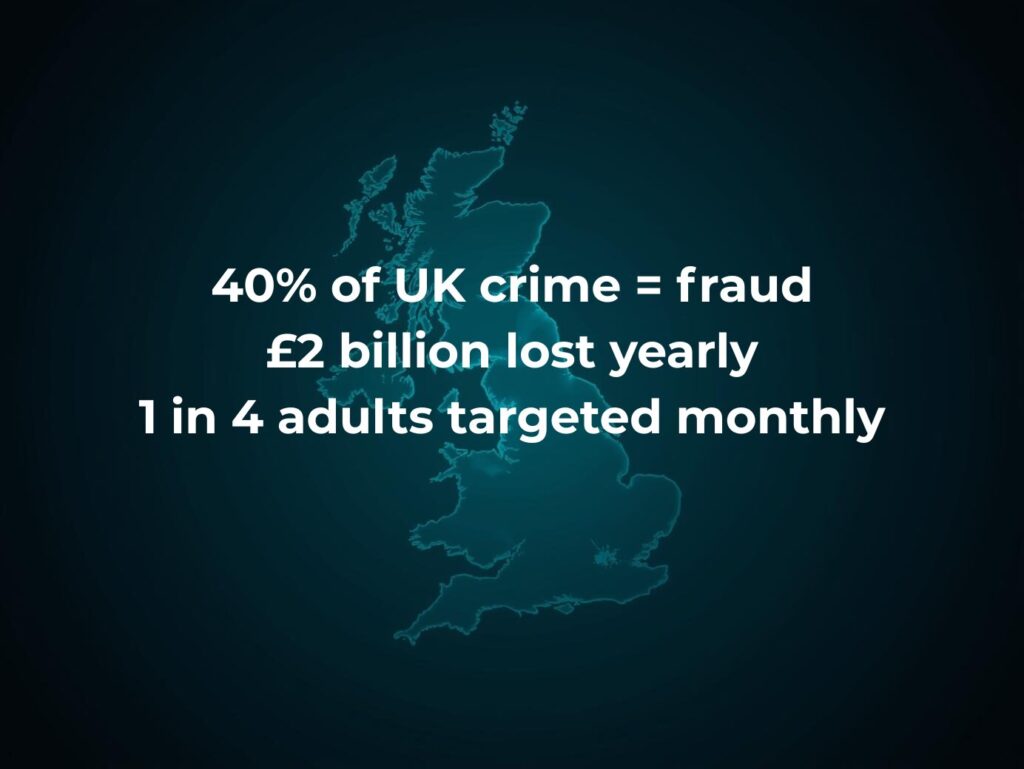
Fraud is the UK’s most common crime — affecting people and businesses every day. Many scams begin with ordinary-looking messages, calls or requests: a rushed message, a small payment, or a false sense of urgency. Spotting those early signs is your best defence.
Below: what fraud looks like, why it works, and how to stop it before it starts.
Common Types of Fraud
Fake redelivery fees and phishing links that look like couriers or Royal Mail.
Read the guide →“Safe account” transfers and OTP theft by fake bank callers pretending to protect you.
Read the guide →Fast affection, emotional isolation and urgent money requests from fake relationships.
Read the guide →Fake emails or texts that trick you into clicking links and entering personal details.
Read the guide →“Guaranteed” high returns or fake trading platforms that disappear with your money.
Read the guide →Upfront payments for goods or pets that never arrive — fake sellers or adverts.
Read the guide →Red Flags Anyone Can Spot
You don’t have to be a tech expert to catch a scam. These are the signs that should make you pause for 10 seconds — before you click, share, or pay.
You’re pushed to act now — scammers use panic to stop you thinking clearly.
Mentions “HMRC”, “police”, or “bank” names to seem official — always check who’s really contacting you.
Even small “£1–£3” fees can be a trick to collect card details or trigger larger withdrawals later.
Hover over a link — if it doesn’t match the real website, don’t click. A single tap can expose your info.
Told not to speak to family, colleagues, or staff — isolation is how scammers keep control.
Guaranteed returns, instant prizes, or huge discounts — if it sounds perfect, it’s probably fake.
If it feels rushed, secret or money-related — treat it as a red flag.
Download the 10-Second PDF →Can you spot the scam in 10 seconds?
Tap the right answer — then grab the one-page PDF to keep.
You get a text from “Royal Mail” asking for a £1.99 redelivery fee. What’s your first move?
No spam — just practical tips.
Printable household resource
Want practical scam checklists in one place?
The UK Scam Safety Toolkit includes printable action sheets for suspicious links, payments, account security and family conversations.
Do this before you click, reply or pay
Use this 10-second check on any text, email, DM or call. If one step fails — stop.
For households wanting printable checklists and practical scam-response steps in one place, the UK Scam Safety Toolkit includes action sheets for suspicious links, payments and account security.
Do you recognise them? Check the full email/number — is it clearly genuine and not a look-alike?
Hover or long-press — does the address clearly match the official site? If not, don’t click.
Any request for payment, secrecy or speed is a red flag. Pause and verify using a trusted route.
No spam — just practical tips.
If you think you’ve been scammed
- Stop any payments or replies.
- Call your bank using the number on your card.
- Report at Report Fraud.
- Forward scam texts to 7726 (free).
- Save screenshots and reference numbers.
Official help & everyday protection
Report fraud and cyber crime through the UK reporting service.
Report at Report Fraud →Forward suspicious emails to the UK’s cyber security centre.
Email report@phishing.gov.uk →Forward scam texts to 7726 for free to report them to your mobile network.
How to report →Use strong passwords, two-step verification and trusted routes before clicking, replying or paying.
Trusted tools →Most scams rely on pressure and rushed decisions
Use the free 10-second scam guide to slow down, check warning signs and avoid acting under pressure.
Download the Free 10-Second Scam Guide →No spam. Practical tips only.
FAQs
Is fraud only online?
Will my bank always refund me?
What’s the quickest way to report a scam text?
Explore more in our Fraud Basics series: